Who The Fuck Are Vietnamese?
- Teddy

- Jun 13, 2025
- 12 min read
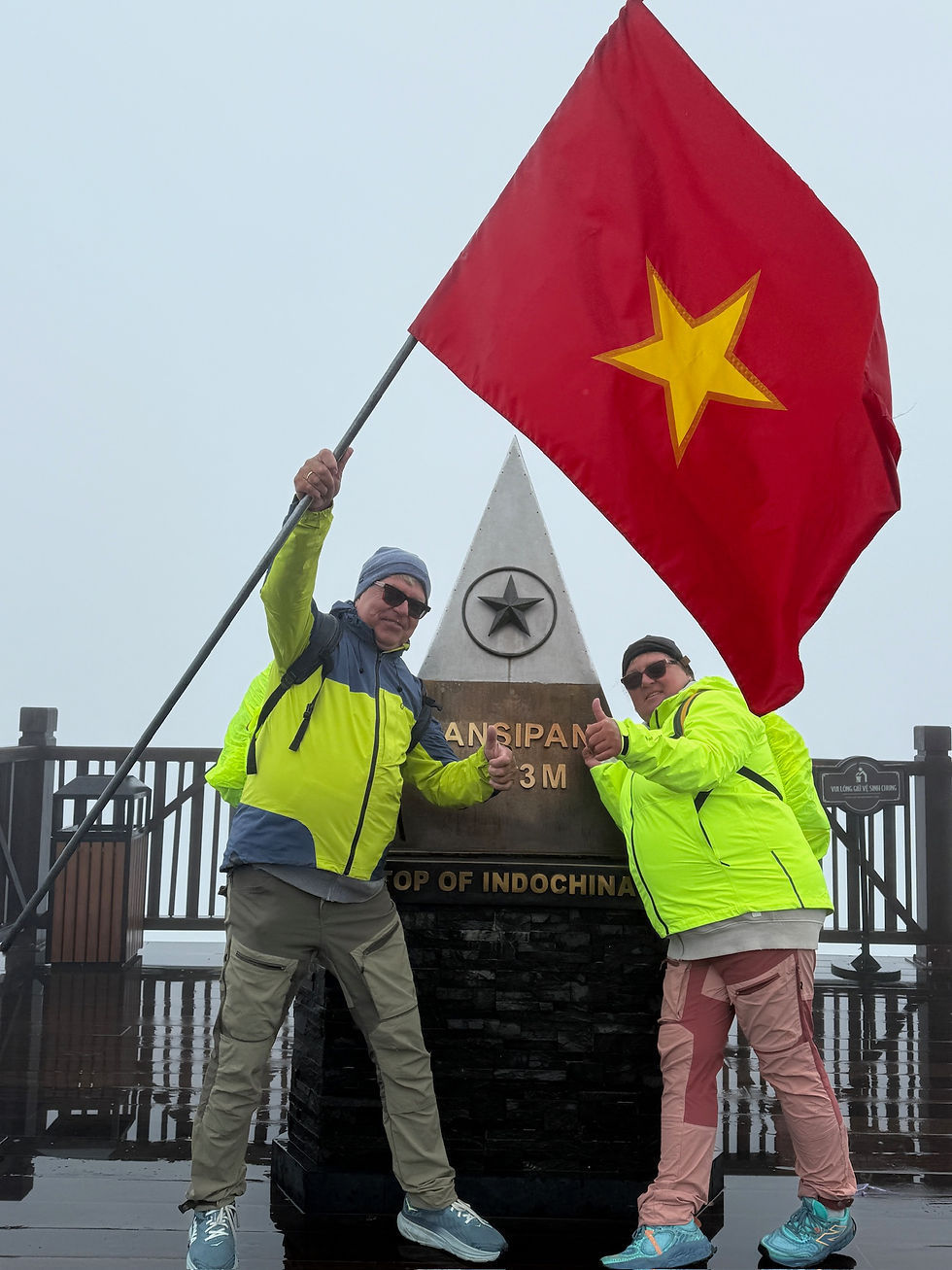
NO travelogue of our moped tour through Vietnam in 2025
Who the fuck are we?
We'd like to briefly introduce ourselves.
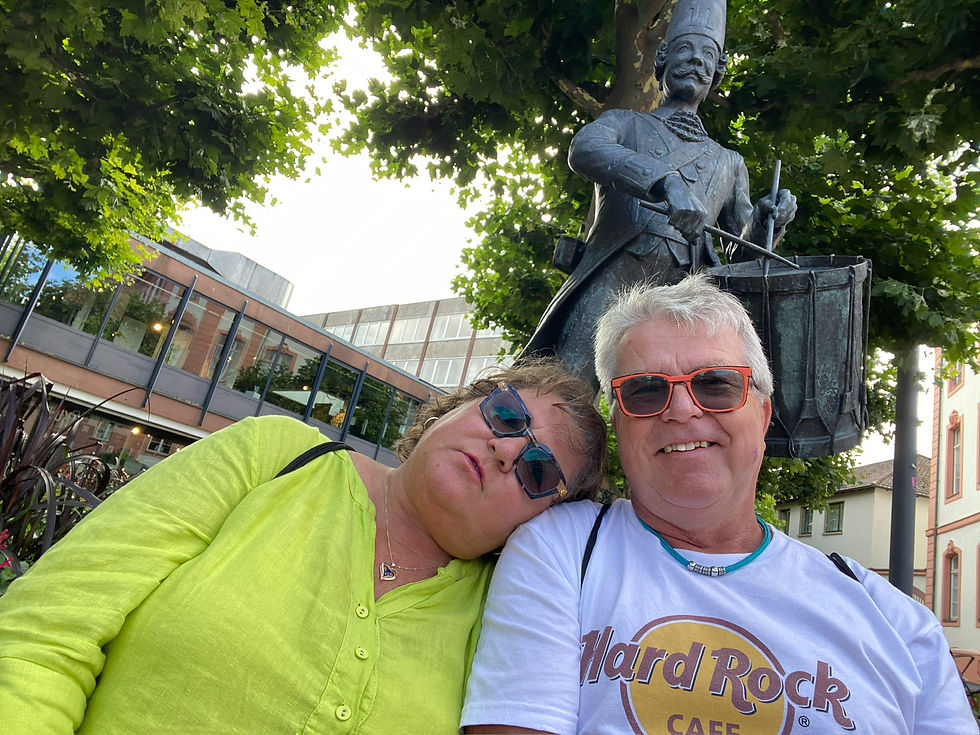
My wife Kerstin, born in 1966, is a winemaker, saleswoman, and all-rounder, and I, Rainer, born in 1960, a craftsman, project manager, and jack-of-all-trades. We've been married for 35 years and are the proud parents of Rebecca and Dominic, who are independent and well-established in their lives, each now raising one child. They've also inspired us to explore the world beyond Europe.
As mentioned at the beginning, this is not a travel report, but a brief description of our impressions and what they did to us.
What the fuck is Vietnam?
We knew we were visiting a country where we would experience anything but the typical European all-inclusive culture. Why Vietnam, of all places? We're often asked. Why not Thailand, practically next door?
As Germans, we subconsciously associate Vietnam with a country embroiled in decades of war.
We knew from an acquaintance—hi Tobi 🙋🏻♂️—that he had studied here and was absolutely thrilled with the country. And, not least, some videos of the stunning landscapes inspired us to begin our first trip to Asia here. Kerstin will certainly share our journey in her travelogue.
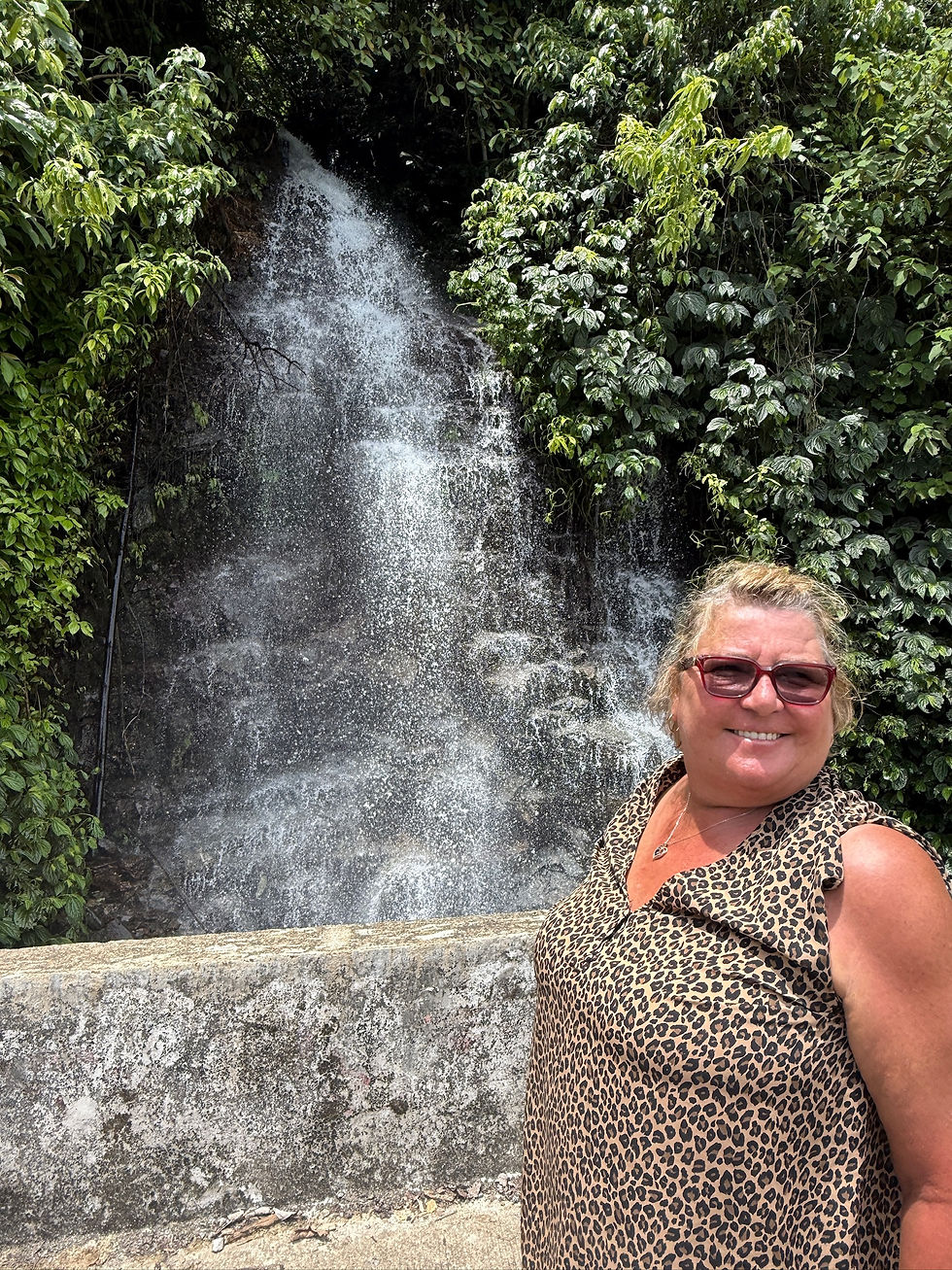
It's difficult to summarize Vietnam and its people in a short report. At the time of writing, we've only been in this breathtaking country for six weeks. Not a single day has gone by that we haven't been blown away by the culture, the traffic, the landscape, or the locals. Most evenings we can't even process all the impressions we've gathered during the day—it's truly amazing...
To the landscape
Compared to Germany, Vietnam is indeed roughly the same size, but it's extremely slender and elongated. It stretches approximately 1700 km from north to south. We started our tour in the south, in Ho Chi Minh City (the locals still call it Saigon), on our rented motorbikes, and have just arrived in Da Nang in central Vietnam. So far, the Central Highlands have been our favorite part, both in terms of scenery and climate – simply breathtaking. There's hardly any tourism, NO ONE speaks English, and the landscape is absolutely stunning. However, we plan to continue our journey to the far north and eventually arrive in Hanoi to conclude our trip.
We'll keep you updated.


To the people
A really difficult topic. We are still overwhelmed by the friendliness and helpfulness of every single local we met. The Vietnamese will ALWAYS try to help you. If they don't know the answer themselves, they'll ask a friend, call a phone-a-friend, or something else entirely... You will never hear, as is common in Germany, "I have no idea."
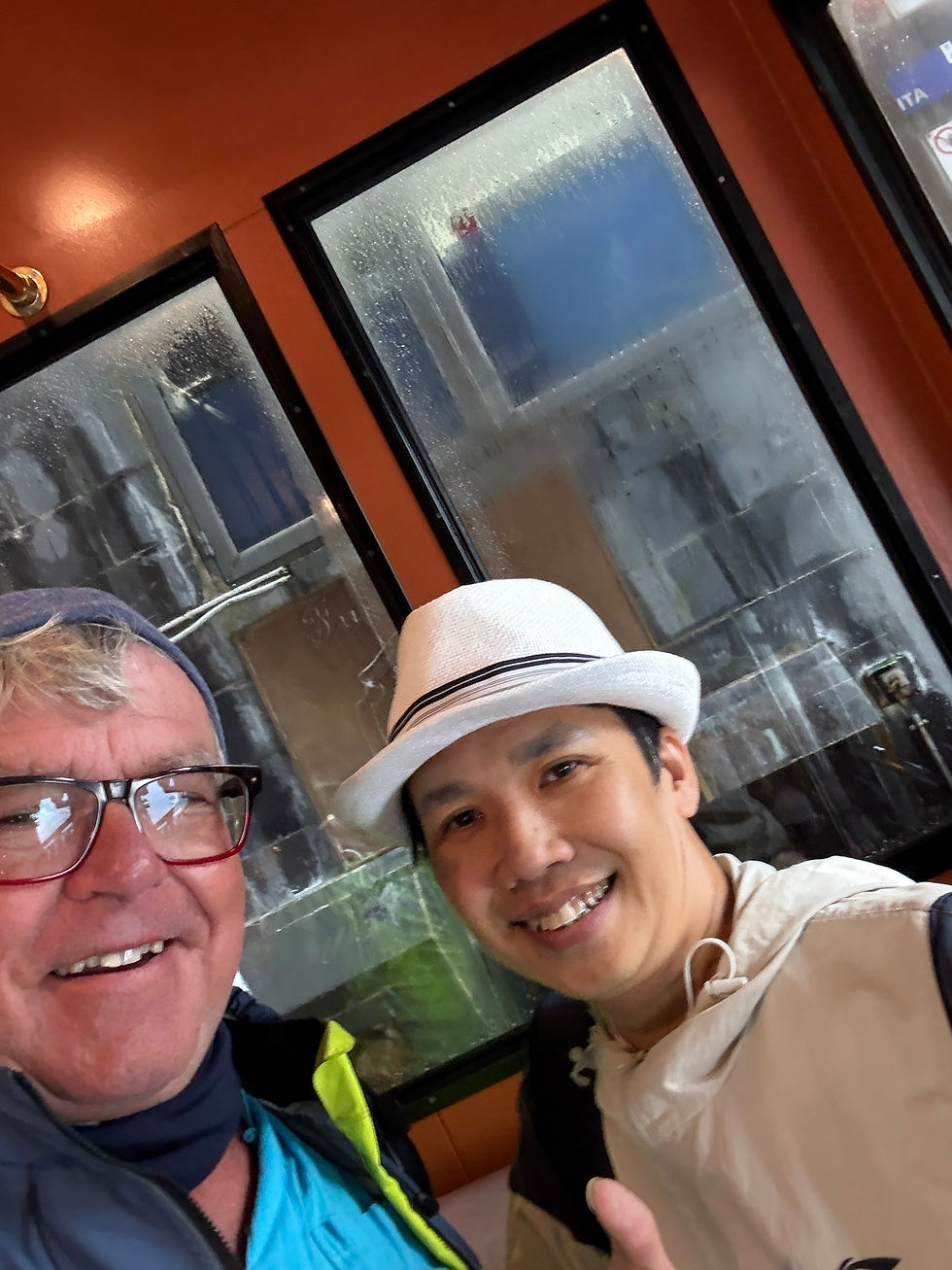
This can sometimes get annoying, especially when you can already tell that the person can't actually help you, yet they're still sacrificing all their energy and time. Time doesn't seem to matter here at all. We haven't experienced a single process that's quick and easy. Whether it's answering a question using Google Translate, ordering food, buying a SIM card, or anything else...
If something isn't right, isn't understood, or seems very unusual, it's simply smiled away or even laughed off. In this context, I'll never forget how we arrived at a large hotel in Da Nang with our two dirty mopeds, dirty clothes, and laden like two gypsies, and the porter asked us in astonishment what WE wanted there. He probably thought we were lost. When we told him we'd booked a room, he didn't answer at first but just laughed loudly. Kerstin will surely tell you more about what happened next in her travelogue.
' ... Anyone who thinks they can get anywhere with sign language here is completely mistaken. Apparently, signs are assigned entirely different meanings in other cultures.
In general, people live much more calmly and relaxed lives.
No one here knows the word "stress," and burnout is completely unheard of. Overall, our impression is that the women are the most industrious. Even on large construction sites, they're the ones hauling heavy bags of cement or pushing overflowing wheelbarrows, while the men tend to sit more relaxed on their excavators or trucks...
When driving by, the cafes are always packed with groups of men.
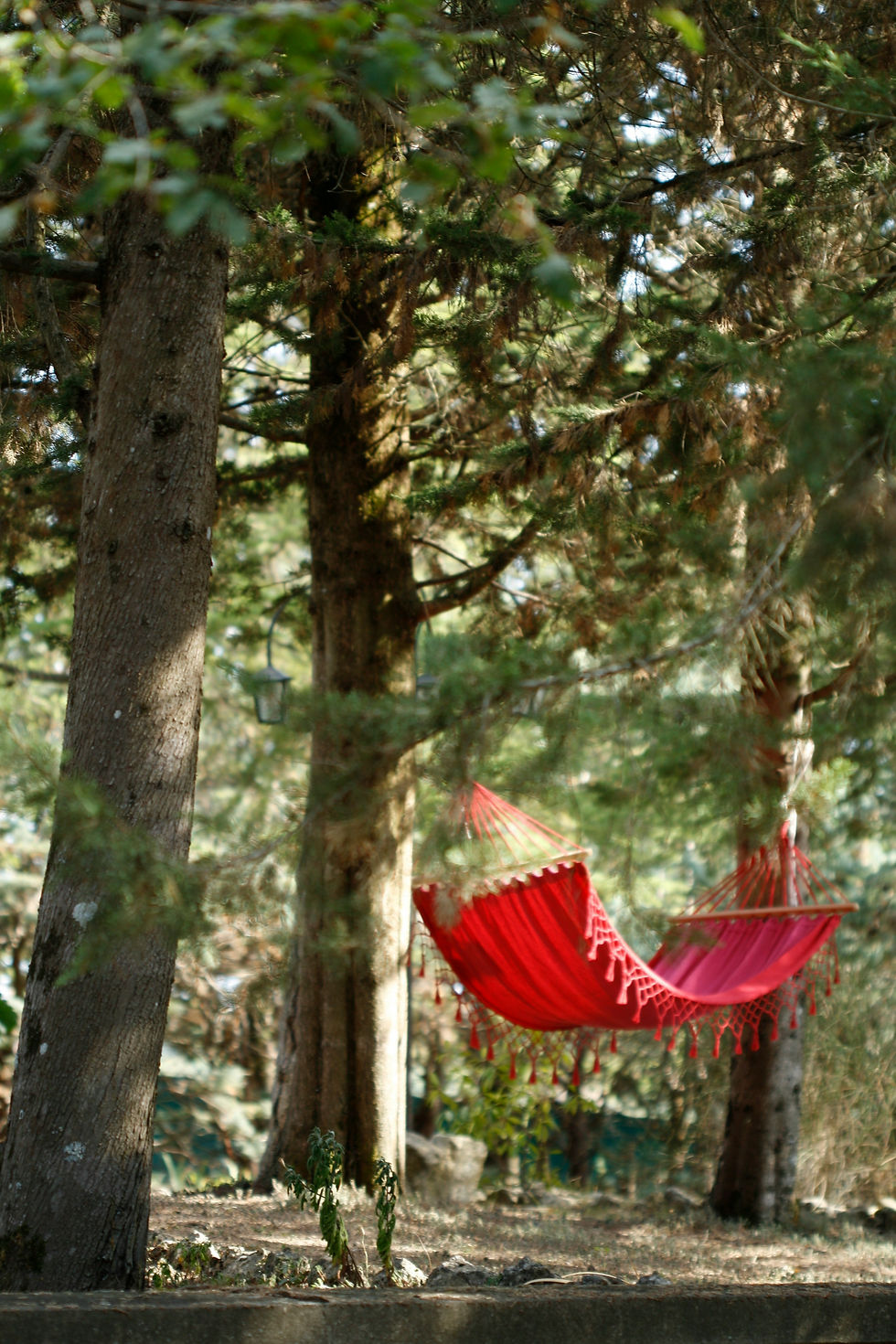
The hammock culture here is quite striking. Every café has several of them, and after coffee, people often like to lie down in them. There are entire "sleeping battery" areas along the way, where an estimated 100 hammocks are lined up in neat rows, and anyone passing by can take a nap for free.
Every house also has at least one hammock, in which some family member is lying, sometimes swaying up and down with a lot of squealing.
Of course, when observing the people, we have to consider who we're interacting with. To be honest, it's primarily the people who receive our money.
But how often were we approached: "Where are you from? How old are you? Can I take a picture with you?" Our European mistrust initially made us recoil and set off alarm bells. But so far, it's always been unfounded. On the contrary, when we lost a backpack containing valuables during our trip, it reappeared a few days later thanks to the cooperation of the police and Airtags. NOTHING was missing, not a single item. This changed our opinion of the Vietnamese incredibly for the better. It's a wonderful feeling to be able to travel in a country where you don't have to feel like you're being robbed and taken advantage of.
We've had the pleasure of meeting so many warm and welcoming people. I also find it interesting that children are given names that are meant to dictate their future lives. This means the parents have an idea of what their children will want to do, and the children feel obligated to live accordingly...

Wedding vows and wedding markets are still very common, especially in the northern regions around Sa Pa, where the parents have the most say.
On the numerous street markets and tourist streets, you'll be approached by EVERY vendor and very often touched, which seems to be part of Vietnamese culture. Even in upscale hotels, the staff practice this, probably with good intentions.
It goes without saying that being constantly approached at the markets and by the numerous street vendors who go from café to hawk vegetables, fish, kitsch, or handicrafts is incredibly annoying. You can't keep saying "no" to everyone and just keep walking, which makes me feel a bit arrogant. And the fact that the vendors are actually hurting themselves, since the potential customers are annoyed and just want to leave, is something they accept.
But what options do the vendors have? If everyone offers the same things and they, like most Vietnamese, live on the breadline, they HAVE to bring something home in the evening to at least feed their families a little. If the tourists aren't the ones who take the money, who else will?
Even though I sometimes feel like a walking ATM as a tourist, I completely understand the locals' fears for their livelihoods; I just need to remind myself of that sometimes.
Poverty isn't necessarily a bad character trait.
Often, the government plays the bigger role here.
The slums
Before embarking on our first big trip, we decided to also see the "bad" sides, to go to the slums, and to talk to the locals. We definitely didn't want to lie on the beach as all-inclusive tourists and pretend that everything was fine behind us.


And as I write this, and with each passing day of our trip, we realize more and more that we've been doing nothing else for months now. Except in the big cities, of course. Slums are normal life in Vietnam. And by now, the term no longer carries a negative connotation for us. Because the inhabitants of these simple huts, stables, and humble houses may be materially poor, but they are so rich in their hearts. They are content with their modest lives and share what little they have with everyone. Above all, they have instilled in us so much contentment and humility regarding our previous lives that I am certain humility will now be a valued part of our lives.
The System
Vietnam is a socialist republic with a one-party system in which the Communist Party holds power. The government consists of the president, the prime minister, and a National Assembly dominated by the Communist Party.
Vietnam is considered a developing country. Over the past few decades, it has transformed from a predominantly agrarian nation into one with a growing industrial base and rising per capita income.
As recently as 1990, Vietnam was the poorest country in the world, even poorer than all African nations. Its per capita gross domestic product was $98. That was less than Sierra Leone or Somalia.
Corruption seems to be rampant here. Even we, as moped riders, were warned about corrupt police officers who stop you just for money. So far, so good...
We always keep some small change near our driver's licenses that we can show if necessary.
We were also advised to immediately remove the moped key from the ignition and put it in our pocket if stopped by the police, before it's confiscated and very difficult to get back.
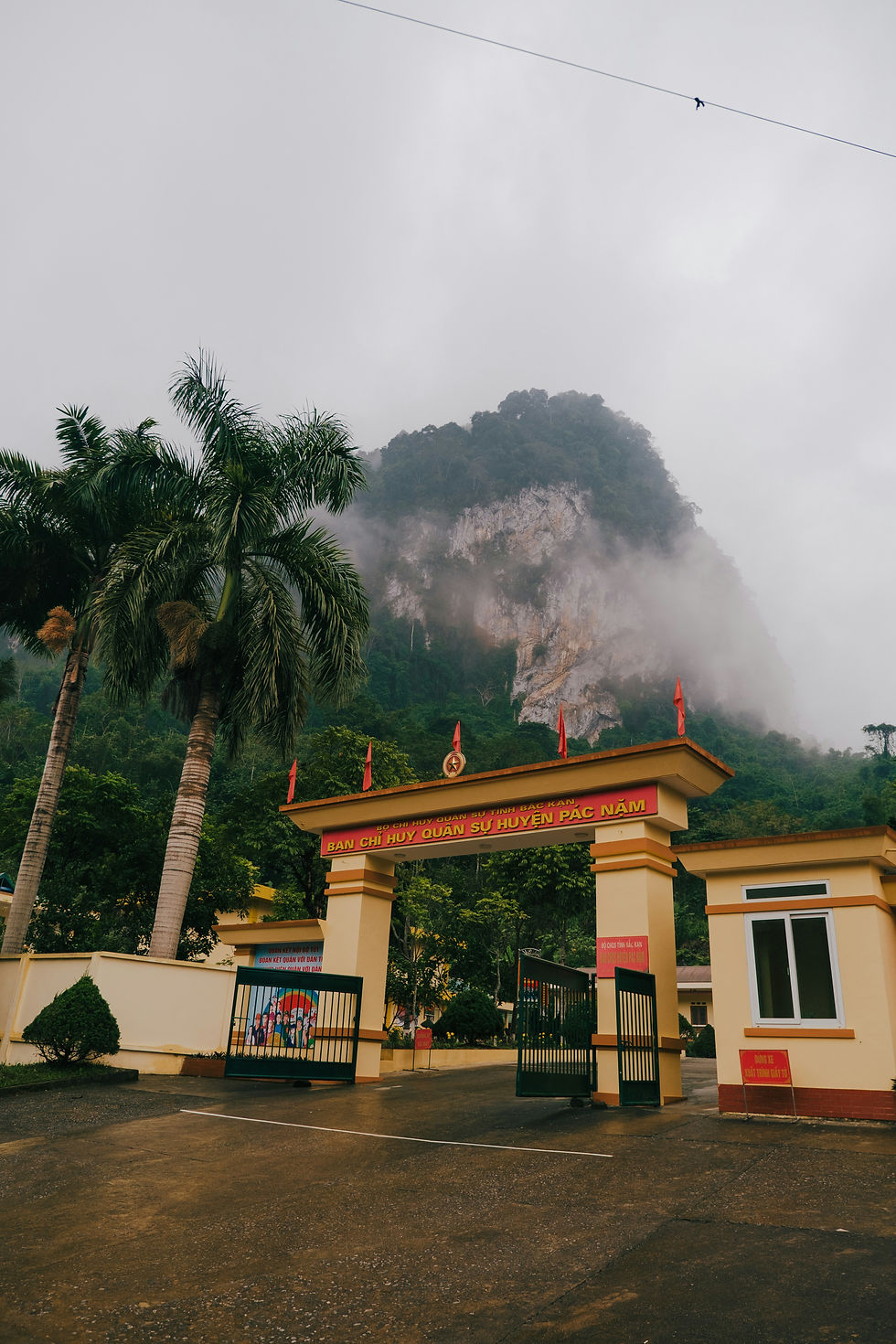
It's striking how everything the state undertakes is simply gigantic in size and value. Newly constructed roads are many times over the size of the city. Artificial lakes are sometimes larger than Bonn. All schools, hospitals, etc., are very often new and in top condition. They go all out here, no half measures...
The Internet
Vietnam was officially connected to the internet in November 1997. The Institute of Information Technology in Hanoi became the first internet service provider in Vietnam in 1994 through the company NetNam. The first email address under the national domain name .vn was established in 1994.
Since the introduction of the internet, Vietnam's economy has grown rapidly and, in my estimation, will overtake all other Asian countries. Vietnamese people are smart.
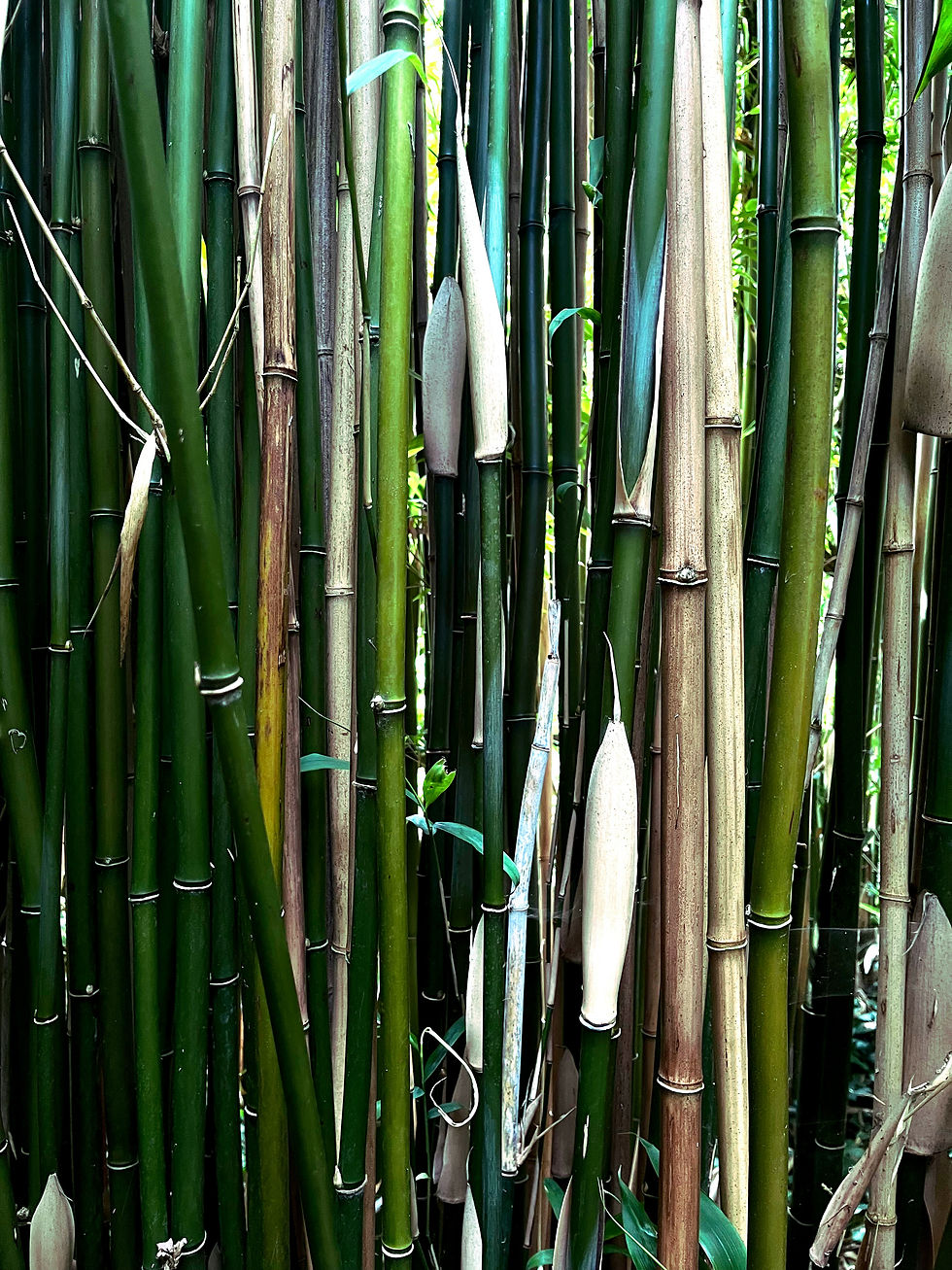
The "Bamboo Firewall" is a term used to describe the Vietnamese government's efforts to regulate, monitor, and control its citizens' internet access. It encompasses both legal measures and technical filters and blocks to prevent access to certain content. The term "Bamboo Firewall" is a metaphor, as it compares the Vietnamese government to a barrier resembling a bamboo forest, restricting citizens' internet access.
The Great War
The Vietnam War is one of the longest military conflicts of the 20th century. It followed directly after the war against the colonial power France and lasted from 1955 to 1975. The war cost approximately 3.8 million lives.
During our stay, I tried to come to terms with this particular war. I had to give up. It is now inconceivable to me how a completely helpless country could be attacked by an overwhelming force, born solely out of the fear that communism would spread further. What that achieved, and whether communism died as a result, we see today: North and South Vietnam are once again peacefully united under communist rule.
I find it admirable how the Vietnamese were able to engage the technologically and materially far superior aggressor in a guerrilla war, so that the latter had no chance against such a clever opponent, who defended themselves with the simplest of means and, in some cases, even their own weapons.
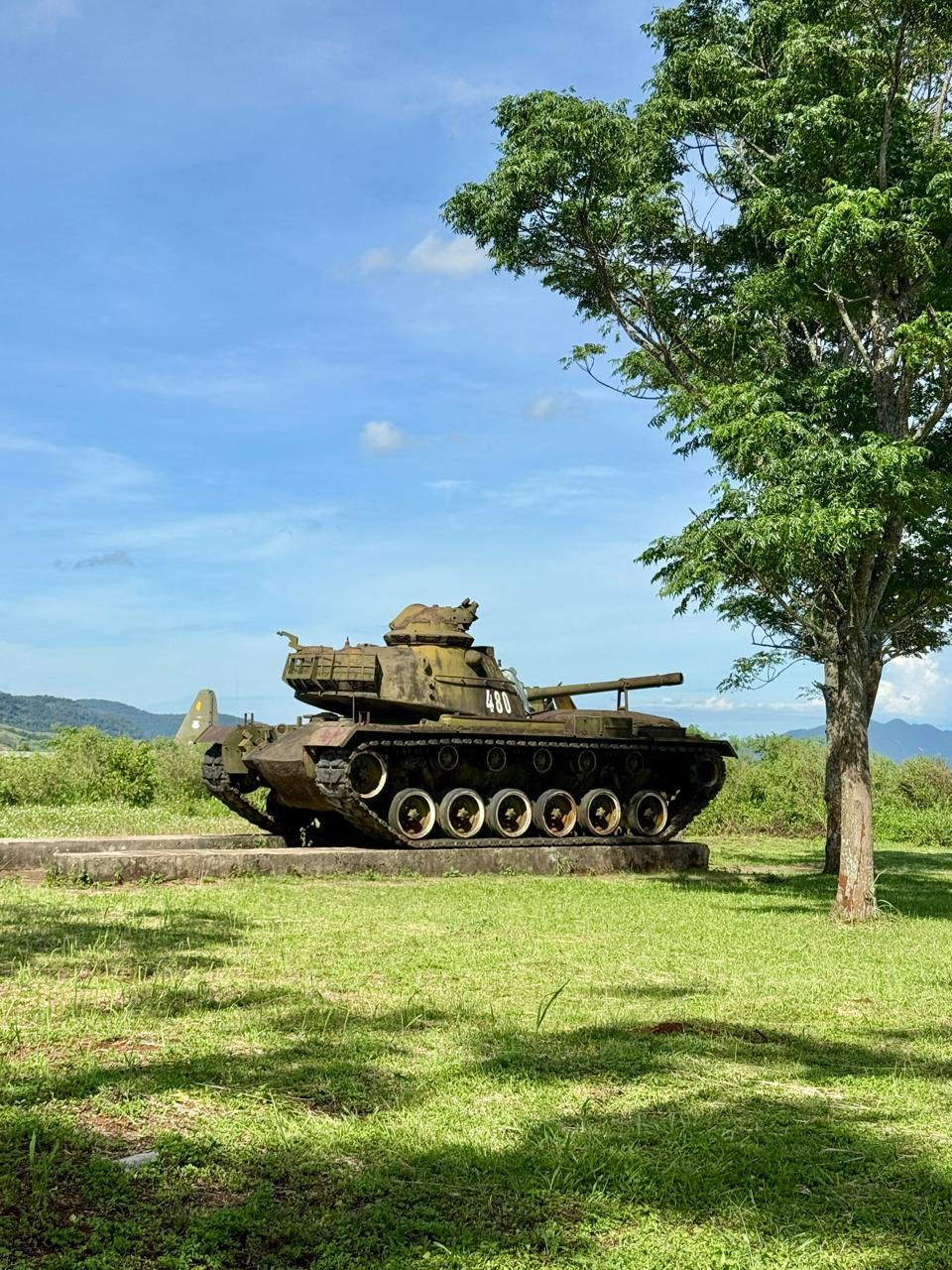
It's shocking to see how many locals still suffer from disabilities today because the Americans used pesticides like Agent Orange as defoliants across the country during their campaign. All to better spot the enemy?! Even the Americans themselves, the soldiers who supported them at the time, and their children from South Korea, Thailand, New Zealand, and Australia still suffer from the effects.
We hardly ever see pedestrians on our trips. Everyone is on or in some kind of vehicle, no matter how mysterious. If you do see a pedestrian, you quickly notice that they have a disability. So many lingering effects of the chemical bombs, passed down to this day...
The traffic
Vietnam's landscape is a dream to explore by moped. That's why we decided to do it. With our little mopeds, which we rented in Saigon—yes, that's still what the locals call it—we stop immediately at every interesting or beautiful spot. That certainly wouldn't be possible with larger vehicles. Besides, we're riding what everyone else is riding: something noisy, which runs on 95 octane fuel and has an engine size of 125cc or less. This is good for social equality and communication, which is difficult enough without a translator app anyway.
Describing traffic on the road is almost impossible. There are supposed to be rules. We have observed the following.
The bigger one has the right of way.
The cheekier one has the right of way.
Everyone drives as they please.
Mostly even through red lights.
And especially against the flow of traffic.
Honking is usually meant kindly, for orientation (like bats do).
Move over quickly when a truck or bus is coming (especially a minibus).
Get the loudest horn you can find.
Definitely cross the intersection before oncoming traffic going straight ahead when turning left.
Try to compensate for the mistakes of others.
Everyone looks out for each other a little.
When they get off their mopeds, they're all normal people again.
Accept it if two chatting moped riders are blocking the road side by side.
Accept it if a young woman stops in the middle of an intersection to put on her raincoat when it suddenly starts to rain.
Don't even try to understand the constant honking of overtaking buses and trucks.
Generally speaking, people drive relatively slowly here by our standards, and there's no speeding. Sure, there are always a few idiots...
Nevertheless, Vietnam is among the countries with the highest number of traffic accidents, 80% of which involve two-wheelers. Anyone who sees the madness here every day isn't surprised.
In the event of an accident, I don't even want to think about what would happen. There doesn't seem to be a proper insurance system here, and you can't get anything from the poor souls anyway. The implication is that, in case of doubt, the foreigner is at fault. Because if they hadn't been there, the accident wouldn't have happened in the first place...
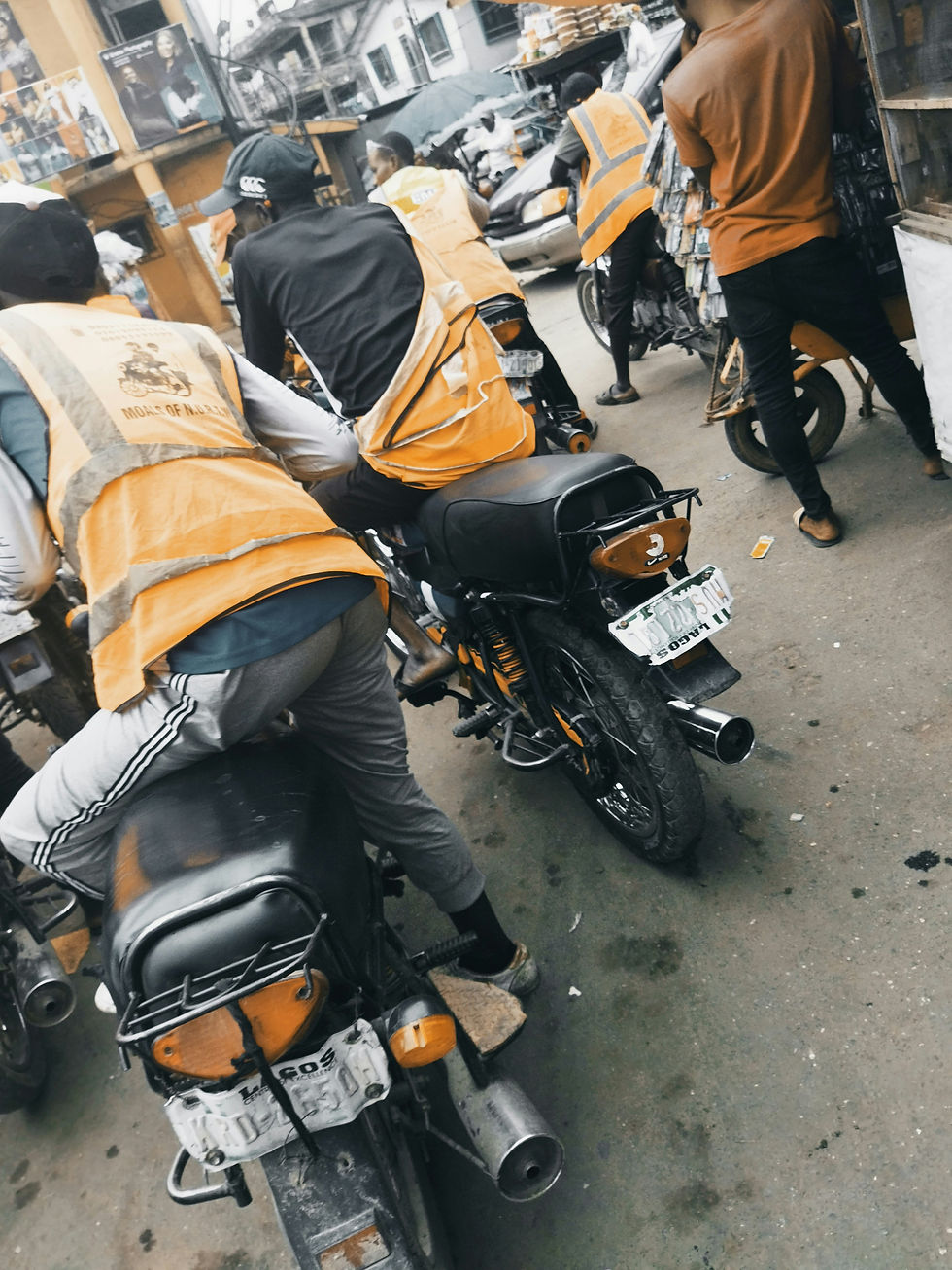
It definitely feels like there are more mopeds than people around here. Many are used for business. They transport EVERYTHING on these mopeds. Pigs, geese, fish, entire moves with large furniture, ladders, 6-meter-long iron profiles, we've even seen families of five on one of these little things. All without any load securing. Just hop on, it'll hold... even the kids just climb on the back. Nobody bothers to check if they're holding on; they do it all by themselves.
We sometimes laugh at the lengths we go to to secure our two backpacks... only to lose one of them along the way...
It's also astonishing to see these old clunkers with fallen-out lights, dangling brakes, and frames held together only by rust, zipping around at breakneck speed, fully loaded.
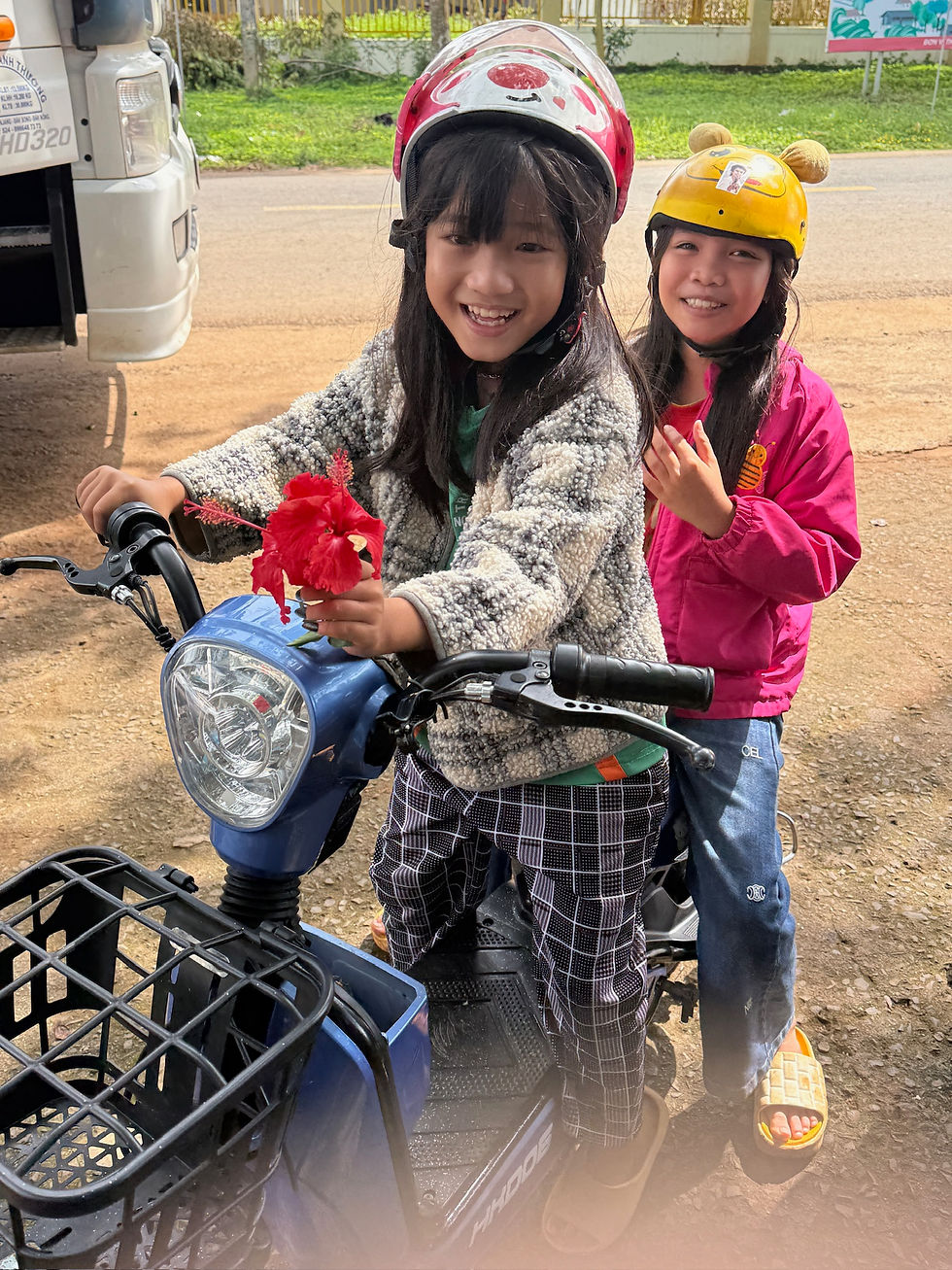
Even small children are already sitting on the scooters as soon as they can touch the ground with their toes, and they do it with a confidence that often makes us wonder what gene we're missing.
The Religion
The majority of Vietnamese people do not belong to any organized religion, but instead practice one or more folk religions, such as ancestor worship or prayer to deities.
The most widespread religion is Buddhism, followed by Catholicism.
What struck us was that there is a small or large altar in every household, hotel, and public building.
In large houses, the ancestral altar can take up an entire room, while in country houses it often occupies the main alcove. It generally consists of a board mounted on the wall or a fairly tall table on which photos of the deceased, one or more incense stick holders, two candlesticks, and sometimes a small incense burner are placed.
Symbolically, all the comforts of earthly life are offered to the ancestors by burning paper objects for them: clothing, hats, wardrobes, beds, cars, motorbikes, fruit, and even counterfeit US dollars.
Vietnam your fruits
We are overwhelmed by the sheer variety of fruit growing here, almost like weeds. For Kerstin, this is paradise.
There are tons of fruits that we consider exotic, but also fruits we've never even heard of. At every place we stay, we're greeted with a plate piled high with the most delicious fruit. The fruit here is not only much bigger, but also much tastier than anything we're used to.
For example, a grapefruit as big as a football and so sweet that even I can eat it without blinking. A truly enriching experience.


Dear Vietnam, what do I hate about you?
First of all, it's your reckless driving whenever you're on a bus or truck. We've learned to ride our mopeds like we're swimming in a school of fish.
But buses and trucks overtake at the most dangerous spots and come straight at us mopeds, honking loudly, forcing us to swerve into the ditch more than
once.
Your constant, excessively loud, and unnecessary honking, even when there's nobody on the road, is simply annoying. The main thing is that you don't have to ease off the gas pedal even a millimeter.
Your vehicles stink and smoke so badly that we're covered in so much black smoke from head to toe in the evenings and have to shower several times. As for our clothes, we've already resigned ourselves to never getting them clean again and will just have to throw them away at the end of the trip.
This isn't a criticism, because you can't possibly know any better yet, and for you, it's mostly about survival. Your environmental sins are simply cruel to us Europeans, who are already overly sensitive to this issue.
It's indescribable how much plastic and trash is simply dumped in nature and how much garbage is burned here, belching smoke and stinking away.
This is actually astonishing because there's some kind of recycling system in place. In every village, you see the poorest of the poor, usually just on a bicycle, collecting trash and meticulously sorting it into plastic, paper, and metal categories before taking it to the nearest collection point, where they're paid a few dong.


But since you now have the internet, I'm sure you'll address this issue more and more with each passing generation. Hopefully not too late.
We would come back again and again, we love this country just the way it is, and we would recommend a trip here to everyone. ❤️


Comments